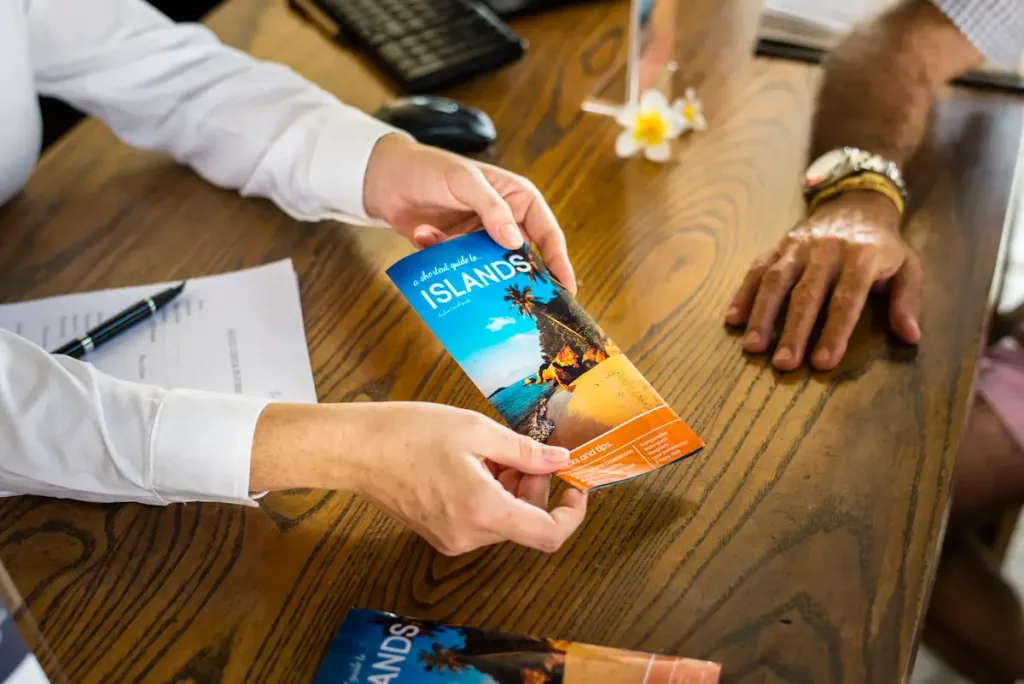
A leaflet that is too small for the message can be ignored. One that is too large for a simple offer can add unnecessary print and distribution costs. Choosing the best leaflet sizes for promotions is therefore a practical commercial decision: the format needs to earn attention, carry the right information and work efficiently.
Best leaflet sizes for promotions: the main options
UK leaflet sizes are usually based on the A paper system. This makes it easier to compare formats and plan artwork, printing and distribution. The most effective promotional sizes tend to be A6, DL, A5 and A4.
A6 leaflets: compact, affordable and direct
At 105 x 148mm, A6 is the familiar postcard-sized format. It is a strong option when your promotion has one clear message: a discount, a menu offer, an opening date, a seasonal service or a booking incentive.
Its strength is efficiency. A6 leaflets use less paper, are economical to print at volume and are easy for a householder to scan. A bold headline, a good image, a simple offer and prominent contact details can work very well on this format.
The trade-off is space. Trying to fit multiple services, lengthy testimonials, terms and conditions and several calls to action onto an A6 leaflet can make it feel crowded. If the message needs explanation, moving up a size usually improves response rather than just making the design busier.
DL leaflets: ideal for vouchers and menus
DL measures 99 x 210mm. Its tall, slim shape is particularly useful for vouchers, appointment reminders, price lists, restaurant menus and promotions designed around a vertical offer.
For local service businesses, a DL leaflet can make a single call to action stand out. A salon might use it to promote a new-client offer, while a tradesperson could present a concise list of core services with a clear telephone number. It also fits naturally with many envelope formats if the campaign includes direct mail alongside door drop distribution.
DL is not automatically better than A6 just because it is longer. The design needs to suit the shape. Landscape photographs, wide product ranges and comparison tables often sit more comfortably on A5 instead.
A5 leaflets: the dependable all-rounder
At 148 x 210mm, A5 is often the best starting point for a promotional leaflet campaign. It provides enough room for a compelling headline, quality imagery, service details, an offer, customer reassurance and a clear next step, without becoming excessive.
That additional space matters when trust is part of the sale. Home improvement firms, care providers, estate agents, gyms, schools and professional services often need more than a price point to persuade a household to respond. An A5 leaflet gives you room to explain what makes the business credible, local and worth contacting.
A5 also has strong shelf presence. It is large enough to be noticed among post, yet compact enough to feel manageable rather than intrusive. For businesses testing door drop advertising for the first time, this balance of impact and cost makes A5 a sensible choice.
A4 leaflets: when detail drives the decision
A4 measures 210 x 297mm and gives your campaign the greatest space for information. It suits brochures, detailed service guides, event programmes, property promotions and public information campaigns where clarity is more important than a quick offer alone.
Used well, A4 can signal substance. A kitchen company may need before-and-after imagery, finance information and product choices. A local authority or public-sector organisation may need to explain eligibility, dates and several ways to access support. Folding an A4 sheet can create a more structured brochure while retaining a premium feel.
However, bigger is not always more effective. A4 costs more to print, may require more considered artwork and can feel disproportionate for a straightforward promotion. If the only objective is to advertise a £10 introductory offer, A5 or A6 may deliver better value.
Match the leaflet size to the campaign objective
Start with the action you want a resident to take. If the goal is an immediate response, such as ordering food, claiming a voucher or booking a seasonal service, smaller formats can work well because they make the offer easy to grasp.
If you are building awareness in a competitive local market, A5 often gives you enough room to establish credibility. Use the front to gain attention, then use the reverse for proof points such as experience, accreditations, service areas, reviews or a simple explanation of how your service works.
For higher-consideration purchases, more space can be justified. A homeowner choosing a conservatory installer or financial adviser is unlikely to decide from a headline alone. In these cases, an A4 folded leaflet or a well-designed A5 format can support a more informed enquiry.
It also depends on the campaign frequency. A smaller leaflet may be ideal for repeated drops with changing offers. A larger, more detailed piece may suit an occasional launch, a major sale or a campaign where households need information they can keep and refer to later.
Do not let design dictate the size
Businesses sometimes choose a leaflet size after the artwork has already been written. This often leads to cramped copy, tiny contact details or important information being removed late in the process. Choose the format first, based on the job the leaflet needs to do, then build the design around it.
Every size should retain the same essentials: a clear benefit, a recognisable business name, a simple call to action and easy-to-find contact details. Avoid using the available space simply because it is there. White space helps readers identify the offer quickly and makes the leaflet feel more professional.
Paper stock also affects perception. A heavier stock can make an A5 leaflet feel more substantial, while a lighter stock may be appropriate for high-volume promotional drops. Gloss can make product images and food photography stand out; uncoated finishes can suit premium, community-focused or environmentally conscious messages. The best choice should reflect the brand, the budget and the purpose of the promotion.
Consider the distribution area and audience
Size should support targeting, not replace it. A well-designed A4 brochure sent to households unlikely to need the service is still wasted spend. Equally, a concise A6 offer can be highly effective when it reaches the right streets at the right time.
Use postcode and street-level selection to focus on the households most likely to respond. For example, a premium home services campaign may be targeted towards suitable property types, while a new local café may prioritise nearby residential areas within a practical delivery radius. The format then becomes part of a more disciplined campaign plan: right message, right household, right coverage.
Reliable distribution is just as important as the print specification. DOR-2-DOR combines local area knowledge with GPS-tracked route logging, helping advertisers plan targeted door drop campaigns with accountable delivery.
A practical choice for most promotions
If you need a straightforward answer, choose A5 when the promotion includes more than a single offer and you want room to build confidence. Choose A6 for concise, high-volume promotions where price, urgency or a simple incentive does most of the selling. Select DL when the vertical format suits vouchers, menus or appointment-led services, and reserve A4 for campaigns where detailed information genuinely helps people decide.
Before committing to print, hold the proposed format in your hand and ask one question: can a busy householder understand the offer and what to do next within a few seconds? If the answer is yes, the leaflet is working hard enough to deserve a place on their doormat.